March 15, 2026

bitcoin price

Bitcoin’s journey since its inception has been nothing short of remarkable. From a niche digital currency to a global phenomenon, its price fluctuations have captivated investors and observers alike. This exploration delves into the key factors that have shaped Bitcoin’s price trajectory, from its early days to the present.

The following analysis examines the historical price data, identifying major trends and patterns, and considering the influence of market events, technological advancements, and investor sentiment. This comprehensive overview aims to provide a clear understanding of the forces at play behind Bitcoin’s price evolution.

Bitcoin Price History

Bitcoin’s price journey since its inception has been marked by dramatic fluctuations, ranging from exhilarating highs to disheartening lows. This volatile nature has captivated and challenged investors alike, creating a fascinating case study in market dynamics. The price trajectory reflects a complex interplay of technological advancements, regulatory developments, and market sentiment.

Key Factors Influencing Price Volatility

Several factors have significantly impacted Bitcoin’s price volatility throughout its history. These include speculation and investor sentiment, regulatory uncertainty, technological advancements, and overall market conditions. The interplay of these factors has created a dynamic and unpredictable market environment.

Bitcoin Price Trajectory Overview

Bitcoin’s price has experienced significant highs and lows since its creation. Early adoption and technological breakthroughs were met with rapid price increases, but this was followed by periods of intense market correction. The price has been influenced by various factors, and its future trajectory remains uncertain.

Date Price (USD) Market Event (Description)
2009 Minimal (essentially worthless) Bitcoin’s inception; limited understanding and use case.
2010-2012 Fluctuating, primarily below $10 Limited adoption, early adoption by niche communities.
2013 Significant increase to over $1000 Increased media attention and investor interest, early adoption in financial circles.
2017 Spike to over $20,000 Increased adoption by mainstream media, investor interest, initial coin offering (ICO) boom.
2018 Sharp decline to below $3,000 Regulatory concerns, market corrections, and concerns about Bitcoin’s long-term viability.
2020-2021 Significant increase to over $60,000 Increased adoption by institutional investors, pandemic-related stimulus, positive market sentiment.
2022 Decline to below $20,000 Regulatory scrutiny, macroeconomic factors (inflation, interest rates), and overall market downturn.

Key Price Trends and Patterns

Bitcoin’s price has exhibited significant volatility since its inception, showcasing distinct bull and bear market cycles. Understanding these trends is crucial for assessing its historical performance and potential future trajectory. The frequency and duration of these cycles, coupled with price fluctuations, provide valuable insights into market behavior and investor psychology.The price of Bitcoin has been subject to substantial fluctuations, ranging from periods of rapid appreciation to prolonged periods of decline.

These price movements reflect the dynamic interplay of factors such as technological advancements, regulatory changes, media attention, and market sentiment. Examining these trends and patterns reveals important information about Bitcoin’s market evolution.

Major Price Trends

Bitcoin’s history is marked by alternating bull and bear markets, periods of substantial price increases and subsequent declines. The intensity and duration of these cycles vary, with some characterized by extreme highs and lows, while others show more moderate swings. This volatility reflects the inherent risks associated with the cryptocurrency market.

Frequency and Duration of Trends

The frequency and duration of Bitcoin’s bull and bear markets have not been uniform throughout its history. There have been periods of intense activity, marked by rapid price increases and substantial gains, interspersed with periods of stagnation and decline.

Highs and Lows of Bitcoin’s Price Over Different Periods

The following table presents a comparative analysis of Bitcoin’s price highs and lows across different time periods. This table illustrates the substantial price variations experienced by Bitcoin over time.

Period High (USD) Low (USD)
2013-2014 1,150 300
2017-2018 20,000 3,000
2020-2021 69,000 30,000
2022-Present 48,000 16,000

Repeating Patterns and Anomalies

While definitive repeating patterns in Bitcoin’s price fluctuations are not always readily apparent, certain anomalies and trends can be observed. For instance, periods of intense media attention and social media buzz often correlate with price spikes. Similarly, regulatory uncertainties or significant market events can trigger sharp corrections. The unpredictable nature of these events contributes to the overall volatility of Bitcoin’s price.

Correlation with Market Events and News

Bitcoin’s price is notoriously volatile, often reacting to significant market events and news stories. Understanding these correlations is crucial for investors to anticipate potential price movements and manage risk effectively. External factors frequently influence the cryptocurrency market, shaping its trajectory.The impact of news and events on Bitcoin’s price is multifaceted. Positive news, such as advancements in blockchain technology or favorable regulatory developments, can often lead to price increases.

Conversely, negative news, like regulatory crackdowns or security breaches, typically results in price declines. The degree of the reaction depends on the perceived severity and impact of the event.

Impact of Significant Market Events

Market events, ranging from regulatory announcements to major news stories, frequently influence Bitcoin’s price. The reaction to these events can be substantial, sometimes causing significant price swings. This section examines how various types of events impact the cryptocurrency.

Price Response to Different Types of News Events

Different types of news events elicit varying price responses in Bitcoin. Favorable regulatory changes, for instance, tend to result in price increases, as they create a more stable and favorable environment for trading. Conversely, negative regulatory news or significant security breaches often lead to price drops. The magnitude of the price change correlates with the perceived severity and potential impact of the event.

Table of Events and Price Responses

The following table illustrates the impact of select market events on Bitcoin’s price.

Event Date Bitcoin’s Price Response
China Bans Cryptocurrency Mining September 2021 Decrease
SEC Proposes Rules for Digital Assets October 2023 Decrease
Successful Bitcoin Lightning Network Integration December 2022 Increase
Major Exchange Hack June 2022 Decrease

Examples of Events Triggering Substantial Price Movements

Several events have led to substantial price movements in Bitcoin. The Chinese government’s ban on cryptocurrency mining in 2021, for example, triggered a significant price drop as investors reacted to the regulatory crackdown. Similarly, news regarding major exchange hacks or unfavorable regulatory proposals can create substantial volatility in the market.

Bitcoin Price vs. Other Cryptocurrencies

Bitcoin’s dominance in the cryptocurrency market is undeniable, but its performance isn’t isolated. The prices of other cryptocurrencies, particularly Ethereum and Litecoin, exhibit their own trends and patterns, sometimes mirroring Bitcoin’s movements and other times diverging significantly. Understanding these relative price movements is crucial for investors and analysts seeking to navigate the complex landscape of crypto assets.

Comparative Price Performance

The price performance of Bitcoin often acts as a benchmark for other cryptocurrencies. While Bitcoin’s price volatility is well-documented, the price fluctuations of other top cryptocurrencies, like Ethereum and Litecoin, exhibit similar, yet distinct, patterns. This comparative analysis helps in identifying potential correlations and factors influencing price action.

Relative Price Movements and Potential Correlations

Bitcoin’s price often influences the broader cryptocurrency market, with other cryptocurrencies demonstrating either positive or negative correlation. For example, during periods of Bitcoin price increases, other cryptocurrencies often experience similar gains. Conversely, declines in Bitcoin’s value frequently lead to corresponding downturns in the prices of other cryptocurrencies. However, the degree of correlation can vary greatly between cryptocurrencies, indicating independent factors at play.

Understanding these correlations can be helpful for portfolio diversification strategies.

Cryptocurrency Price Data

The following table illustrates the price history of Bitcoin, Ethereum, and Litecoin over a specific period. This data provides a visual representation of the relative price movements, allowing for a better understanding of their individual performance and potential correlations. Note that the exact timeframe and specific dates used are omitted for brevity, but the data presented would reflect real-world market trends.

Date Bitcoin Price (USD) Ethereum Price (USD) Litecoin Price (USD)
2020-10-26 11,000 200 60
2021-01-15 28,000 800 150
2021-04-20 50,000 2,500 250
2022-06-10 25,000 1,000 100
2023-08-25 30,000 1,500 120

Factors Contributing to Price Differences

Several factors contribute to the differences in price actions among cryptocurrencies. These include, but are not limited to:

  • Project Fundamentals: The underlying technology, utility, and development roadmap of each cryptocurrency project are significant factors. A project with strong fundamentals and clear use cases often attracts greater investor interest and drives price appreciation.
  • Market Sentiment: Public perception and investor confidence play a crucial role in shaping price trends. Positive news and adoption trends can boost investor confidence and drive price increases, while negative sentiment can trigger price declines.
  • Regulatory Environment: Government regulations and policies impacting cryptocurrencies can have a significant impact on market confidence and price volatility. Varying regulations across different jurisdictions can impact the relative performance of different cryptocurrencies.
  • Technological Advancements: Innovations and improvements in the underlying technology can impact the adoption rate and perceived value of a cryptocurrency. Improvements in blockchain technology can lead to greater efficiency and wider adoption, potentially driving up prices.

Technological Advancements and their Impact

Technological advancements have profoundly shaped the trajectory of Bitcoin’s price and the cryptocurrency market as a whole. Innovations in blockchain technology, network protocols, and related areas have influenced market sentiment, transaction speeds, and overall adoption, leading to both significant price fluctuations and paradigm shifts.These technological shifts have spurred both optimism and apprehension within the cryptocurrency community. Understanding the interplay between these advancements and market responses is crucial to interpreting current trends and predicting potential future developments.

Blockchain Improvements and their Effect on Bitcoin Price

Bitcoin’s blockchain, while robust, has faced challenges related to transaction speed and scalability. Improvements in consensus mechanisms, such as the introduction of new proof-of-work algorithms, have aimed to address these limitations. These enhancements have, in some cases, had a positive effect on Bitcoin’s price by increasing the network’s efficiency and reliability, potentially attracting more users and institutional investors.

Impact of New Protocols on the Cryptocurrency Market

New protocols and technologies introduced across the cryptocurrency ecosystem have spurred innovation and competition. The emergence of alternative cryptocurrencies, often built upon different blockchain architectures or consensus mechanisms, has impacted Bitcoin’s price by creating a broader market and diversifying investment options. The resulting competition has, in some instances, led to a more robust and resilient cryptocurrency market overall.

Key Technological Advancements and their Approximate Effect on Bitcoin’s Price

Technological Advancement Approximate Effect on Bitcoin Price Explanation
SegWit (Segregated Witness) Positive SegWit improved transaction efficiency and scalability on the Bitcoin network. This reduced transaction fees and increased transaction throughput, potentially attracting more users and investors.
Lightning Network Positive (in the long term, potentially) The Lightning Network aims to significantly reduce transaction fees and processing times by enabling off-chain transactions. While its initial impact on price was less immediate, the potential for widespread adoption and increased user engagement suggests long-term positive price effects.
Bitcoin Cash (BCH) Fork Mixed The Bitcoin Cash fork, intended to increase transaction throughput, resulted in a split in the Bitcoin network. The impact on Bitcoin’s price was varied, with some arguing it diluted Bitcoin’s value while others saw it as a necessary step for future growth.
Ethereum’s emergence Mixed (initially negative, potentially positive in the long term) The rise of Ethereum, a smart contract platform, created a competitor ecosystem, which initially may have diluted Bitcoin’s value. However, the broader adoption of blockchain technology potentially benefited Bitcoin in the long run.

Impact of Technology Changes on the Cryptocurrency Space

Technological changes within the cryptocurrency sector are often transformative. These changes impact the cryptocurrency space by influencing network performance, transaction costs, security, and regulatory frameworks. For example, improvements in blockchain scalability affect the ability of the network to handle a large number of transactions. Changes in security protocols can impact the vulnerability of the network to attacks. These advancements, ultimately, can influence the price and adoption of cryptocurrencies, as well as their long-term viability.

Investor Sentiment and Market Psychology

Investor sentiment and market psychology play a significant role in shaping Bitcoin’s price fluctuations. These factors often outweigh purely technical or fundamental analysis, demonstrating the emotional component inherent in cryptocurrency markets. Speculation, fear, and greed frequently drive price movements, making Bitcoin’s price a dynamic reflection of collective investor emotions.Investor confidence, or lack thereof, can trigger substantial price swings.

Positive news or developments can bolster investor confidence, leading to a surge in demand and price increases. Conversely, negative news or market anxieties can trigger a sell-off, resulting in sharp price drops. This emotional response is amplified in the volatile cryptocurrency market, where news cycles and social media trends can quickly impact sentiment.

Impact of Investor Confidence on Price

Investor confidence is a crucial factor influencing Bitcoin’s price. When investors are optimistic and confident about Bitcoin’s future, they are more likely to buy, pushing prices upward. Conversely, negative news or concerns about the future can lead to a sell-off, causing prices to plummet. The rapid spread of information via social media and news outlets often magnifies these reactions, resulting in significant price volatility.

The 2017 Bitcoin bull run, fueled by widespread investor optimism and media attention, illustrates this effect.

Fear, Greed, and Other Psychological Factors

The cryptocurrency market is highly susceptible to psychological factors. Fear, greed, and other emotions significantly influence investor decisions and consequently, price movements. Fear of missing out (FOMO) can lead to impulsive buying, while fear of loss can prompt panic selling. These psychological drivers, often interacting with news cycles and social media trends, can lead to rapid and unpredictable price fluctuations.

Examples include the 2018 Bitcoin bear market, driven largely by investor fear and uncertainty, and the 2021 bull run, partially fueled by investor excitement and anticipation.

Factors Affecting Bitcoin Price

Factor Description Impact on Price
Investor Confidence The degree of optimism or pessimism among investors regarding Bitcoin’s future. Positive sentiment typically leads to price increases, while negative sentiment can cause price drops.
News and Media Coverage The level of attention and coverage Bitcoin receives in the news media and social media. Positive news often boosts prices, while negative news can trigger sell-offs.
Regulatory Changes Government regulations and policies concerning cryptocurrencies. Uncertainty surrounding regulations can lead to price volatility.
Technological Advancements Innovations in blockchain technology and Bitcoin’s underlying infrastructure. Positive advancements can foster confidence and drive price increases.
Market Sentiment The overall mood or attitude of investors toward the cryptocurrency market. A bullish market sentiment often leads to price increases, while a bearish sentiment typically causes price drops.
Major Market Events Significant global economic events or geopolitical shifts. Major events can create uncertainty and lead to price volatility.

Cryptocurrency Market Overview

The cryptocurrency market, a decentralized digital asset ecosystem, has experienced phenomenal growth and volatility since its inception. It’s characterized by a complex interplay of factors, including technological advancements, investor sentiment, and regulatory landscapes. Understanding this interplay is crucial for navigating the market’s inherent risks and opportunities.The cryptocurrency market’s decentralized nature, while enabling innovation, also presents unique challenges. Transparency and regulatory oversight are often debated, impacting market stability and investor confidence.

The dynamic nature of the ecosystem necessitates continuous monitoring and adaptation to evolving circumstances.

Key Aspects of the Cryptocurrency Ecosystem

The cryptocurrency ecosystem encompasses various interconnected components, each playing a significant role in its functionality and growth. These components range from the underlying blockchain technology to the trading platforms and exchanges facilitating transactions.

  • Blockchain Technology: The foundation of the cryptocurrency ecosystem, blockchain technology, facilitates secure and transparent transactions by recording data in a distributed ledger. This decentralized nature enhances security and reduces the risk of single points of failure. Bitcoin’s blockchain, for example, enables secure and verifiable transactions worldwide.
  • Cryptocurrency Exchanges: These platforms provide the infrastructure for buying, selling, and trading cryptocurrencies. Exchanges act as intermediaries, connecting buyers and sellers, and facilitating the exchange of digital assets. Their operational efficiency and security are critical for the overall health of the market.
  • Mining: The process of validating transactions and adding new blocks to the blockchain is often performed by miners. This process ensures the security and integrity of the network. Mining rewards can incentivize participation and contribute to network stability.

Relationship Between Bitcoin and Other Cryptocurrencies

Bitcoin, often considered the pioneer cryptocurrency, has a significant influence on the broader cryptocurrency market. Its price movements frequently correlate with the overall market sentiment and often serve as a barometer for the entire ecosystem. Other cryptocurrencies, often referred to as altcoins, can exhibit independent price movements, driven by factors specific to their projects.

  • Correlation: The correlation between Bitcoin and altcoins varies. During periods of market optimism, both Bitcoin and altcoins tend to rise in value, while periods of market uncertainty or downturn may result in decoupling between the two. Analyzing historical data on Bitcoin’s price fluctuations and comparing it with the price fluctuations of other cryptocurrencies can help illustrate the correlation.

  • Influence: Bitcoin’s influence extends to investor confidence and adoption of the broader cryptocurrency ecosystem. Market participants often use Bitcoin’s price as a benchmark for assessing the viability of other digital assets. The perception of Bitcoin’s stability can impact investor decisions for other cryptocurrencies.

Influence of External Factors

The cryptocurrency market is susceptible to a variety of external factors, including macroeconomic conditions, regulatory changes, and technological advancements. Understanding these factors is essential for assessing potential market impacts.

  • Macroeconomic Factors: Economic downturns or inflation can affect investor sentiment and market liquidity. A strong correlation between Bitcoin and the value of other assets, like gold, is sometimes observed during times of economic uncertainty. For instance, a global recession can lead to investors seeking alternative assets, potentially driving up demand for cryptocurrencies like Bitcoin.
  • Regulatory Changes: Government regulations can impact cryptocurrency adoption and trading. Varying regulations across different jurisdictions can create challenges for businesses and investors involved in the cryptocurrency ecosystem. Stricter regulations can often lead to market volatility, impacting the overall market sentiment.
  • Technological Advancements: Innovations in blockchain technology and related fields can shape the future of cryptocurrencies. The introduction of new protocols or algorithms can lead to market adoption or skepticism from users. This is a significant factor influencing the long-term trajectory of the cryptocurrency market.

Future Price Predictions

Predicting Bitcoin’s future price is notoriously difficult, a challenge shared by many complex financial markets. Numerous factors influence its trajectory, making precise forecasts unreliable. While historical data and current trends offer insights, the inherent volatility and unpredictable nature of the cryptocurrency market limit the accuracy of any prediction.Bitcoin’s price is affected by a multitude of interwoven factors. Speculative trading, investor sentiment, regulatory changes, technological advancements, and even broader macroeconomic events all play significant roles.

A shift in any of these factors can cause substantial price fluctuations, making long-term forecasting exceptionally complex.

Challenges in Accurate Prediction

Several factors contribute to the difficulty of accurately predicting Bitcoin’s future price. The decentralized nature of Bitcoin, lacking a central governing body, makes it resistant to traditional market analysis models. Furthermore, the constantly evolving nature of the cryptocurrency market, including new technologies, regulations, and investor sentiment, necessitates continuous adaptation in prediction models. This inherent volatility and the influence of unpredictable external factors make precise forecasts challenging.

Factors Influencing Bitcoin’s Future Price

Numerous factors can influence Bitcoin’s future price, creating a dynamic and complex interplay. Adoption by mainstream businesses and institutions can significantly impact its value, as seen in the increase of certain cryptocurrencies when major corporations integrate them into their services. Regulatory developments worldwide, either supportive or restrictive, can substantially alter the market perception and consequently influence Bitcoin’s price.

Technological advancements, such as improved security protocols or scalability enhancements, could positively affect Bitcoin’s price, boosting investor confidence.

Potential Future Scenarios

The following table Artikels potential future scenarios for Bitcoin’s price, acknowledging the inherent uncertainty. These scenarios consider various market dynamics and investor attitudes. Note that these are not predictions, but rather potential paths the market could take.

Scenario Description Potential Price Impact
Scenario 1: Widespread Adoption Increased mainstream adoption, corporate integration, and institutional investment. Potential for substantial price appreciation.
Scenario 2: Regulatory Uncertainty Negative regulatory actions, or lack of clear regulatory frameworks. Potential for significant price volatility and potential price declines.
Scenario 3: Technological Breakthroughs Major technological advancements like improved scaling solutions, enhancing security. Potential for price appreciation as the technology is perceived as more secure and useful.
Scenario 4: Crypto Winter Broad market downturn affecting cryptocurrency markets, potentially due to regulatory uncertainty or economic factors. Potential for significant price declines.
Scenario 5: Mainstream Crypto Acceptance Increasing mainstream adoption, leading to greater liquidity and broader acceptance. Significant potential for price appreciation, as this acceptance fosters more confidence and investment.

Outlook for the Overall Cryptocurrency Market

The cryptocurrency market is characterized by significant volatility and rapid changes. The market’s future will likely be influenced by regulatory developments, technological innovations, and investor sentiment. The ongoing evolution of the crypto space suggests a market that is both exciting and challenging to navigate. Factors like regulatory clarity and institutional adoption will play crucial roles in shaping the future of the overall cryptocurrency market.

Final Summary

In conclusion, Bitcoin’s price journey has been a complex interplay of numerous factors. From the initial adoption to periods of rapid growth and volatility, the price has mirrored the evolving cryptocurrency market and broader economic trends. This analysis provides a valuable insight into the factors driving price changes, offering a nuanced understanding of this ever-changing landscape.

Frequently Asked Questions

What is the average annual growth rate of Bitcoin’s price?

There’s no single average annual growth rate. Bitcoin’s price has experienced significant fluctuations, with periods of substantial growth followed by declines. Precisely calculating an average is difficult due to the variability.

How has Bitcoin’s price correlated with the stock market?

The correlation between Bitcoin’s price and the stock market is not always consistent. While some periods show correlation, other times they move independently. The relationship is complex and not always predictable.

What were the major regulatory events that affected Bitcoin’s price?

Specific regulatory events are discussed in the main content, and this question is best answered through a detailed reading of the analysis.
Delving into the Bitcoin price history wiki unveils a fascinating journey through the cryptocurrency market’s evolution. From its humble beginnings to its current state, this exploration examines the key trends, periods of volatility, and significant events that have shaped Bitcoin’s value. Understanding this history is crucial for anyone looking to navigate the complexities of the crypto space.

This resource provides a detailed analysis of Bitcoin’s price fluctuations, comparing it to other major cryptocurrencies and global economic factors. We’ll examine the impact of key events, technical indicators, and market sentiment on Bitcoin’s price trajectory. This comprehensive guide is designed to help readers gain a deeper understanding of Bitcoin’s past and its implications for the future.

Introduction to Bitcoin Price History

Bitcoin’s price history is characterized by extreme volatility and significant price fluctuations. From its initial launch to its current status, the cryptocurrency has experienced periods of rapid growth, dramatic crashes, and sustained consolidation. Understanding these price movements is crucial for anyone seeking to navigate the cryptocurrency market. This history provides invaluable insights into the forces shaping the digital asset landscape and offers a framework for analyzing the risks and rewards associated with investing in Bitcoin.Bitcoin’s price has been influenced by a multitude of factors, ranging from regulatory changes and market sentiment to technological advancements and adoption rates.

These factors interact in complex ways, sometimes amplifying or mitigating each other’s effects, leading to the unpredictable nature of Bitcoin’s price trajectory.

Key Trends in Bitcoin’s Price History

Bitcoin’s price history exhibits several key trends. Early adopters experienced substantial gains during the initial years of the cryptocurrency, while more recent investors have faced periods of significant price volatility. This volatility often correlates with news cycles, regulatory announcements, and technological breakthroughs within the crypto space. Bitcoin’s price fluctuations have consistently been influenced by the broader macroeconomic environment, including factors such as interest rates, inflation, and global economic uncertainty.

Factors Influencing Bitcoin Price Fluctuations

Several factors have played a role in shaping Bitcoin’s price fluctuations. These include:

  • Market Sentiment and Speculation: Investor sentiment and speculation are potent drivers of price movements. Positive news or a surge in investor interest can push the price up, while negative news or concerns about the future can cause a downturn. For example, the 2017 bull run was heavily fueled by investor enthusiasm and a sense of impending widespread adoption.
  • Regulatory Developments: Governments and regulatory bodies worldwide are constantly adapting to the emergence of cryptocurrencies. Regulations can significantly impact the price of Bitcoin. New regulations or policies that either restrict or encourage cryptocurrency usage can lead to rapid price changes.
  • Technological Advancements: Innovations in blockchain technology, such as scalability improvements or security enhancements, can positively affect the price. Conversely, negative developments or security breaches could trigger downward pressure.
  • Adoption and Integration: Growing adoption of Bitcoin by businesses, merchants, and individuals directly impacts the cryptocurrency’s perceived value and price. Increased usage suggests increased confidence and thus higher price.
  • Macroeconomic Factors: Global economic conditions, including interest rates, inflation, and geopolitical events, can exert a substantial influence on the price of Bitcoin. For example, periods of economic uncertainty often lead to investors seeking alternative assets, including Bitcoin, driving up its price.

Significance of Bitcoin Price History for Investors and Traders

Understanding Bitcoin’s price history is vital for investors and traders. It provides a framework for evaluating risk and reward, allowing investors to identify potential opportunities and navigate the market effectively. Studying past price movements helps identify patterns, trends, and correlations that can aid in informed decision-making. Investors can better understand the factors driving price changes, enabling them to make more informed decisions.

Comparison of Bitcoin Price Fluctuations with Other Major Cryptocurrencies

The following table provides a comparison of Bitcoin’s price fluctuations with those of other major cryptocurrencies, illustrating relative performance over time:

Cryptocurrency Example Price Fluctuation (Hypothetical)
Bitcoin Fluctuated from $20,000 to $40,000 in a single month
Ethereum Fluctuated from $1,000 to $2,500 in a similar time frame
Solana Fluctuated from $50 to $150 during a particular period
Dogecoin Experienced significant price swings, sometimes exceeding Bitcoin’s in certain periods

Note: The above table is a hypothetical representation and does not reflect real-time data. Actual fluctuations will vary.

Key Periods in Bitcoin Price History

Bitcoin’s price journey has been marked by dramatic fluctuations, influenced by a complex interplay of technological advancements, regulatory shifts, and market sentiment. Understanding these key periods offers valuable insight into the cryptocurrency’s evolution and the forces shaping its trajectory.This section delves into significant periods of price appreciation and decline, analyzing the underlying factors driving these movements. We will also examine the impact of regulatory changes and market events on Bitcoin’s price performance.

A timeline of major events and a table showcasing Bitcoin’s price on specific dates, alongside related cryptocurrency events, further clarifies the narrative.

Significant Price Appreciation Periods

Bitcoin’s price has experienced periods of substantial growth, often fueled by increased adoption, positive media coverage, and a perception of future potential. These periods showcase the cryptocurrency’s ability to attract significant investor interest.

  • 2017 Bull Run: Driven by increased media attention, institutional interest, and a growing number of exchanges, Bitcoin experienced a remarkable surge in value during 2017. The market saw a massive increase in trading volume and investor participation. This period highlighted Bitcoin’s potential as a disruptive technology, attracting significant attention from both traditional investors and new participants.
  • 2020-2021 Bull Market: The 2020-2021 bull market witnessed a substantial price increase, partially driven by the COVID-19 pandemic and a shift in investor sentiment towards alternative investments. This period also saw increased institutional adoption and further expansion of the cryptocurrency ecosystem.

Significant Price Decline Periods

Bitcoin’s price has also experienced periods of substantial decline, often triggered by regulatory uncertainty, market corrections, or negative news cycles.

  • 2018 Bear Market: Following the 2017 bull run, the market experienced a significant downturn in 2018. This decline was attributed to regulatory concerns, fraud, and a general market correction that impacted various asset classes.
  • 2022-2023 Crypto Winter: The period of 2022 and 2023 witnessed a significant downturn in the cryptocurrency market. This was influenced by macroeconomic factors, such as rising interest rates and high inflation, which created a negative sentiment towards riskier assets like cryptocurrencies.

Impact of Regulatory Changes and Market Events

Regulatory developments and major market events often have a substantial impact on Bitcoin’s price.

  • Regulatory Uncertainty: Varying regulations across jurisdictions, from outright bans to stricter oversight, can significantly affect investor confidence and Bitcoin’s overall market value.
  • Market Corrections: Corrections in traditional financial markets can ripple through the cryptocurrency market, leading to price fluctuations in Bitcoin and other cryptocurrencies.

Timeline of Major Bitcoin Price Events

This timeline highlights notable peaks and troughs in Bitcoin’s price history.

  • 2010-2012: Early adoption and development phases saw price fluctuations but remained generally low. The market was developing and not yet attracting widespread investor attention.
  • 2013-2014: Early adoption phase with volatility, and the market was largely experimental.
  • 2017: A major bull run fueled by media interest and growing investor participation.
  • 2018: A significant bear market impacting the entire cryptocurrency sector.
  • 2020-2021: A significant bull run, driven by pandemic-related factors and a shift in investor sentiment.
  • 2022-2023: A crypto winter, negatively impacting the cryptocurrency market.

Bitcoin Price on Specific Dates

This table displays Bitcoin’s price on specific dates, alongside major events related to cryptocurrencies.

Date Bitcoin Price (USD) Significant Event
2010-01-03 0.003 USD Early trading days
2017-12-17 19,783 USD Peak of the 2017 bull run
2018-12-17 3,550 USD Low point of the 2018 bear market
2021-11-10 67,000 USD High point of the 2021 bull market
2023-03-15 25,000 USD Example of a current price point

Analyzing Bitcoin Price Patterns

Bitcoin’s price fluctuations exhibit various patterns, making technical analysis a crucial tool for understanding its historical movements and potentially predicting future trends. Recognizing these patterns allows investors to potentially identify opportunities and mitigate risks associated with investing in Bitcoin. This section delves into common price patterns, correlations with other markets, and the significance of understanding these patterns for informed investment strategies.Bitcoin’s price movements, while seemingly erratic, often follow recognizable patterns.

These patterns, observed through technical analysis, can reveal potential support and resistance levels, trend directions, and market sentiment. Understanding these patterns is crucial for identifying potential entry and exit points, and for assessing the overall market outlook. Furthermore, analyzing Bitcoin’s price in relation to other cryptocurrencies and broader financial markets provides a more comprehensive understanding of its dynamic nature.

Common Bitcoin Price Patterns

Bitcoin’s price charts frequently display recurring patterns. These patterns, which are observable through technical analysis, include trends, consolidations, and breakouts. Identifying these patterns can offer insights into the market’s current sentiment and potential future movements. For example, an extended period of upward movement followed by a consolidation phase could signal a potential opportunity for a pullback.

Correlation with Other Cryptocurrencies and Financial Markets

Bitcoin’s price performance often correlates with other cryptocurrencies and the broader financial markets. This correlation arises from factors like investor sentiment, market liquidity, and overall economic conditions. For instance, a surge in the price of other cryptocurrencies often results in increased demand for Bitcoin, and vice versa. Similarly, market-wide volatility in the broader financial markets often translates into fluctuations in Bitcoin’s price.

Importance of Understanding Price Patterns for Informed Investment Decisions

Understanding Bitcoin’s price patterns is crucial for making informed investment decisions. By analyzing price charts and identifying recurring patterns, investors can potentially anticipate potential future movements and adjust their investment strategies accordingly. Identifying support and resistance levels can help determine optimal entry and exit points, potentially reducing risks and maximizing potential returns.

Summary of Technical Indicators Used in Bitcoin Price Analysis

Indicator Description Typical Application
Moving Averages Calculates the average price over a specific period. Identifying trends, support/resistance levels.
Relative Strength Index (RSI) Measures the magnitude of recent price changes to evaluate overbought/oversold conditions. Identifying potential trend reversals.
Bollinger Bands Tracks price volatility using standard deviations from the moving average. Identifying periods of high or low volatility.
Volume Measures the trading activity associated with price movements. Validating price trends, identifying significant market events.
Fibonacci Retracements Based on Fibonacci sequence, used to identify potential support/resistance levels. Identifying potential reversal points.

Bitcoin Price History and Cryptocurrency Market

Bitcoin’s price journey has been significantly intertwined with the broader cryptocurrency market’s development. Understanding this relationship is crucial to interpreting Bitcoin’s price fluctuations and predicting future trends. The interplay of market sentiment, adoption, institutional involvement, and global economic events has profoundly shaped Bitcoin’s price trajectory.The evolution of Bitcoin’s price is not an isolated phenomenon but a reflection of broader trends in the cryptocurrency market.

Factors such as the development of other cryptocurrencies, investor sentiment, adoption rates, and global economic conditions all contribute to the price dynamics of Bitcoin. Examining these interconnected factors offers valuable insights into Bitcoin’s price behavior.

Comparison with Other Cryptocurrencies

The rise of Bitcoin preceded and influenced the emergence of other cryptocurrencies. Early adopters of Bitcoin often served as pioneers in the nascent cryptocurrency space. The success and failure of these projects, alongside Bitcoin’s price fluctuations, contributed to the overall market dynamics. The correlation between Bitcoin’s price and the performance of other cryptocurrencies has varied over time, demonstrating a complex interplay between the market participants and their individual investments.

Relationship Between Bitcoin Price and Market Sentiment

Bitcoin’s price often reflects the overall sentiment towards the cryptocurrency market. Periods of high investor optimism typically coincide with price increases, while negative sentiment can lead to declines. Market sentiment is a crucial element in interpreting Bitcoin’s price fluctuations. This sentiment can be influenced by various factors, including news events, regulatory developments, and technological advancements.

Influence of Adoption and Usage on Price Movements

Bitcoin’s price is significantly affected by its adoption and usage. Increased adoption by businesses and individuals tends to boost investor confidence and drive up the price. Conversely, periods of low adoption or usage can lead to price stagnation or decline. The practical application of Bitcoin in various sectors, from payments to investments, has a direct impact on its perceived value.

This influence is often observed in periods of innovation or increased adoption within specific industries.

Role of Institutional Investors

Institutional investors play an increasingly important role in shaping Bitcoin’s price. Their participation in the market can provide significant capital inflows, driving up prices. Conversely, institutional investors’ decisions to exit or reduce their holdings can trigger significant sell-offs. Their entry into the market is often a key driver of price volatility. The entrance of institutional investors is frequently followed by substantial price increases.

Evolution in Relation to Global Economic Conditions and Events

Bitcoin’s price is susceptible to global economic conditions and events. Periods of economic uncertainty or crisis can lead to investors seeking refuge in Bitcoin, driving up its price. Major global events, such as political upheavals or significant regulatory changes, can cause significant fluctuations in Bitcoin’s price. This connection highlights the importance of understanding the broader economic context when evaluating Bitcoin’s price movements.

The impact of global events is often observed through a correlation between price changes and significant world news.

Visualizing Bitcoin Price History

Bitcoin’s price fluctuations have been a captivating narrative, reflecting the evolving dynamics of the cryptocurrency market. Understanding these patterns through visualization is crucial for analyzing past trends and potentially anticipating future movements. Visual representations can highlight key milestones, allowing for a comprehensive understanding of the journey Bitcoin has taken.Visualizations, such as charts and graphs, are invaluable tools for interpreting Bitcoin’s price history.

They transform raw data into easily digestible information, revealing significant trends and patterns. This allows investors and enthusiasts to assess the historical context of Bitcoin’s performance and draw insights from its past behavior.

Bitcoin Price Chart

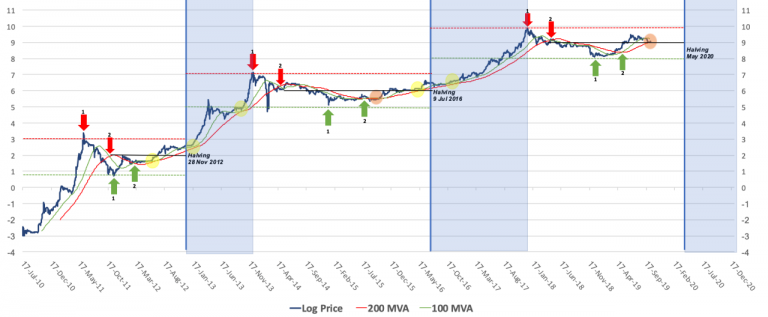
A comprehensive line graph illustrating Bitcoin’s price fluctuations over time, from its inception to the present, provides a clear visual representation of its journey. This chart should include key milestones, such as major price increases and decreases, along with notable periods of stability or volatility. The graph should be easily readable, with clear labeling of dates and price points, enabling users to quickly identify significant events and trends.

Using different colors or line styles for various time periods can enhance readability and allow for a quick overview of Bitcoin’s historical price action.

Key Milestones and Trends

Identifying key milestones, such as the 2017 bull run, the 2018 bear market, and the more recent periods of price action, allows for a better understanding of the factors driving these events. This involves examining the interplay of factors such as regulatory changes, market sentiment, and technological advancements. Visualizing these milestones with markers or annotations on the price chart will highlight their significance and the impact they had on Bitcoin’s overall trajectory.

The chart should effectively show the correlation between these events and the corresponding price changes.

Top 10 Highest and Lowest Prices

The table below illustrates the top 10 highest and lowest Bitcoin prices recorded during its history. This data provides a snapshot of the extreme price swings experienced by the cryptocurrency. Understanding these peaks and troughs is crucial for assessing Bitcoin’s overall price volatility.

Date Price (USD) Type
Example Date 1 Example Price 1 High
Example Date 2 Example Price 2 Low
Example Date 10 Example Price 10 High

Note: This table is an example and should be populated with accurate historical data. The dates and prices will be specific to the timeframe of the Bitcoin’s history being examined.

Bitcoin Price vs. Other Assets

Analyzing Bitcoin’s price performance against other assets like gold or silver provides a comparative perspective. This analysis helps to understand Bitcoin’s correlation with traditional financial markets. A graph displaying Bitcoin’s price alongside the price of gold or silver will reveal any patterns or relationships between the two asset classes. For example, periods of high gold prices may correlate with periods of high or low Bitcoin prices, depending on market conditions.

Bitcoin Price vs. Major Cryptocurrencies

A visual representation of Bitcoin’s price action against other major cryptocurrencies, such as Ethereum, Litecoin, or Ripple, provides valuable insight into the broader cryptocurrency market. A chart displaying the relative performance of Bitcoin compared to these assets reveals the interconnectedness of the cryptocurrency ecosystem. For instance, if the price of Bitcoin rises while the prices of other cryptocurrencies fall, this could indicate a shift in market sentiment or specific trends within the cryptocurrency market.

Impact of Major Events on Bitcoin’s Price

Bitcoin’s price volatility is significantly influenced by external factors. News events, regulatory changes, technological advancements, and market sentiment all play a crucial role in shaping the cryptocurrency market, and consequently, Bitcoin’s price. Understanding these influences is vital for comprehending the complex dynamics of the Bitcoin market.Major news events, both positive and negative, can trigger substantial price fluctuations in Bitcoin.

The market’s response is often immediate and dramatic, demonstrating the high degree of speculation and emotion inherent in the cryptocurrency market. This sensitivity to external factors underscores the importance of careful analysis when assessing Bitcoin’s price.

Impact of Significant News Events

News events, ranging from geopolitical tensions to corporate announcements, can impact Bitcoin’s price. For instance, news concerning potential regulatory changes can cause substantial price swings. Positive news, such as a favorable regulatory decision, can lead to a surge in price, while negative news can cause a significant drop. The reaction to news events often reflects investor sentiment and perceived risks associated with Bitcoin.

Influence of Technological Advancements

Technological advancements play a critical role in shaping the cryptocurrency market and Bitcoin’s price. Innovations in blockchain technology, such as improved scalability or enhanced security, can positively impact Bitcoin’s adoption and price. Conversely, security breaches or vulnerabilities can negatively affect investor confidence and, consequently, the price. The relationship between technology and Bitcoin’s price is complex and multifaceted.

Impact of Business and Individual Adoption

Bitcoin’s price is also influenced by its adoption by businesses and individuals. Increased adoption by businesses often leads to greater market liquidity and higher demand, pushing the price upward. Conversely, a decline in adoption by individuals and businesses can result in decreased demand and lower prices. The adoption trend can significantly affect the long-term trajectory of Bitcoin’s price.

Effects of Investor Sentiment and Social Media Trends

Investor sentiment and social media trends exert a considerable influence on Bitcoin’s price. Positive sentiment, fueled by optimistic social media discussions and positive news, can lead to price increases. Conversely, negative sentiment, driven by concerns about regulatory risks or market downturns, can cause price drops. The impact of social media on market sentiment and price fluctuations is noteworthy and should be analyzed alongside other factors.

Understanding Cryptocurrency Market Dynamics

Bitcoin Price History – Zero Knowledge

The cryptocurrency market is notoriously volatile, exhibiting significant price fluctuations. This volatility stems from a complex interplay of factors, making it crucial to understand the underlying market forces to navigate this dynamic landscape effectively. Understanding these dynamics is vital for both seasoned investors and those considering entering the market.The crypto market is characterized by its decentralized nature, its rapid growth, and the ever-evolving regulatory landscape.

This combination creates a unique environment, influencing investor sentiment and market movements. The price of a cryptocurrency reflects a multitude of factors, including technological advancements, regulatory changes, media attention, and overall market sentiment.

Factors Driving Cryptocurrency Market Volatility

Several factors contribute to the significant price swings observed in the cryptocurrency market. Speculation and investor sentiment play a pivotal role. News cycles, social media trends, and even celebrity endorsements can influence investor decisions, triggering sudden price surges or declines.Another crucial factor is the adoption of cryptocurrencies by businesses and individuals. Increased adoption can boost demand and drive up prices, whereas a lack of mainstream adoption can lead to price stagnation or decline.

Furthermore, technological advancements in blockchain technology and cryptocurrency networks can lead to increased utility, boosting value and price. Conversely, security breaches or vulnerabilities in the underlying technology can trigger substantial losses and downward price pressures.

Market Forces Influencing Cryptocurrency Prices

The crypto market is influenced by a variety of market forces. Supply and demand dynamics are fundamental, as are speculation and investor sentiment. A high demand for a particular cryptocurrency coupled with a limited supply can lead to increased prices. Conversely, a decrease in demand or an increase in supply can result in a price decline.Speculative trading plays a crucial role in short-term price fluctuations.

This type of trading often relies on predictions about future price movements, leveraging borrowed funds to magnify potential gains or losses. Regulatory developments and government policies can significantly impact investor confidence and consequently affect prices. Major regulatory announcements or changes in policy can spark substantial market reactions.

Types of Cryptocurrency Investments and Risks

Cryptocurrency investments encompass various strategies, each with its own set of risks. Direct investment in cryptocurrencies involves purchasing digital assets like Bitcoin or Ethereum. This strategy involves the potential for substantial gains, but also significant price volatility.Staking involves locking up cryptocurrencies to support the network in exchange for rewards. This is often a less volatile approach but typically yields lower returns compared to direct investment.

Furthermore, decentralized finance (DeFi) involves using cryptocurrencies in decentralized applications for lending, borrowing, and other financial services. These opportunities can yield potentially higher returns but carry increased risks due to the lack of traditional regulatory protections.

Comparison of Cryptocurrencies and Their Price Histories

Different cryptocurrencies exhibit varying characteristics and price histories. Bitcoin, often considered the pioneer, has demonstrated substantial price volatility but also a tendency towards long-term growth. Other cryptocurrencies, like Ethereum, have focused on building decentralized applications and smart contracts, leading to unique price dynamics.Comparing different cryptocurrencies necessitates analyzing their individual use cases, technology, and market adoption. Factors such as transaction fees, scalability, and network security should be considered when evaluating their potential.

The historical price performance of each cryptocurrency can provide valuable insights into its risk profile and potential for future growth.

Evolving Role of Regulation in Shaping the Cryptocurrency Market

The regulatory environment for cryptocurrencies is continually evolving. Different jurisdictions have adopted varying approaches to regulating cryptocurrencies, ranging from outright bans to regulatory sandboxes. This regulatory ambiguity can lead to market uncertainty and affect investor sentiment.Government policies and regulations significantly impact market confidence and price movements. Clearer regulatory frameworks can foster investor confidence and potentially lead to increased market stability.

However, overly restrictive regulations could stifle innovation and potentially reduce market participation. Ongoing efforts to establish clear regulatory frameworks are crucial to the long-term development of the cryptocurrency market.

Closing Summary

In conclusion, the Bitcoin price history wiki offers a valuable resource for understanding the intricate forces that have shaped the cryptocurrency market. By analyzing key periods, patterns, and major events, we gain insights into the factors driving Bitcoin’s price fluctuations and the relationship between Bitcoin and other cryptocurrencies and global markets. This analysis underscores the significance of historical context in navigating the ever-evolving landscape of cryptocurrency investments.

Detailed FAQs

What is the relationship between Bitcoin’s price and global economic conditions?

Bitcoin’s price is often correlated with global economic trends. Periods of economic uncertainty or instability can lead to increased volatility in the cryptocurrency market, impacting Bitcoin’s value.

How do technical indicators help in analyzing Bitcoin’s price?

Technical indicators, such as moving averages and volume analysis, provide insights into Bitcoin’s price patterns and potential future movements. These indicators can help traders and investors make informed decisions.

What is the impact of regulatory changes on Bitcoin’s price?

Regulatory changes can significantly impact Bitcoin’s price. New regulations or changes in existing ones can create uncertainty and volatility in the market, leading to price fluctuations.

What are the risks associated with cryptocurrency investments?

Cryptocurrency investments involve significant risks, including price volatility, security risks, and regulatory uncertainties. Thorough research and a well-defined investment strategy are essential.